
Castles
Best Castles in Romania 2026: Medieval Fortresses & Royal Palaces
Romania packs more fairytale castles into its Carpathian Mountains than practically anywhere else in Europe. You'll find everything from Dracula's legendary fortress perched on rocky cliffs to opulent royal palaces that rival Versailles...

Romania packs more fairytale castles into its Carpathian Mountains than practically anywhere else in Europe. You'll find everything from Dracula's legendary fortress perched on rocky cliffs to opulent royal palaces that rival Versailles in their grandeur. The country's turbulent history left behind a collection of medieval fortresses, Renaissance palaces, and Gothic strongholds scattered across Transylvania, Wallachia, and Moldavia.
Romanian castles maintain their authentic medieval atmosphere. Unlike many fairytale castles of Bavaria, Romania's fortresses were built for real defense against Ottoman invasions, not royal comfort. You can still walk through arrow slits, climb spiral staircases worn smooth by centuries of footsteps, and explore dungeons that once held prisoners of war.
The best castle route covers five must-see fortresses within a 150-kilometer radius of Brasov, making it possible to visit multiple castles in 2-3 days. Entry fees range from 30-50 Romanian lei (roughly 6-10 euros as of May 2026), and most castles offer English audio guides for an additional 15 lei.
Bran Castle: Romania's Most Famous Dracula Castle
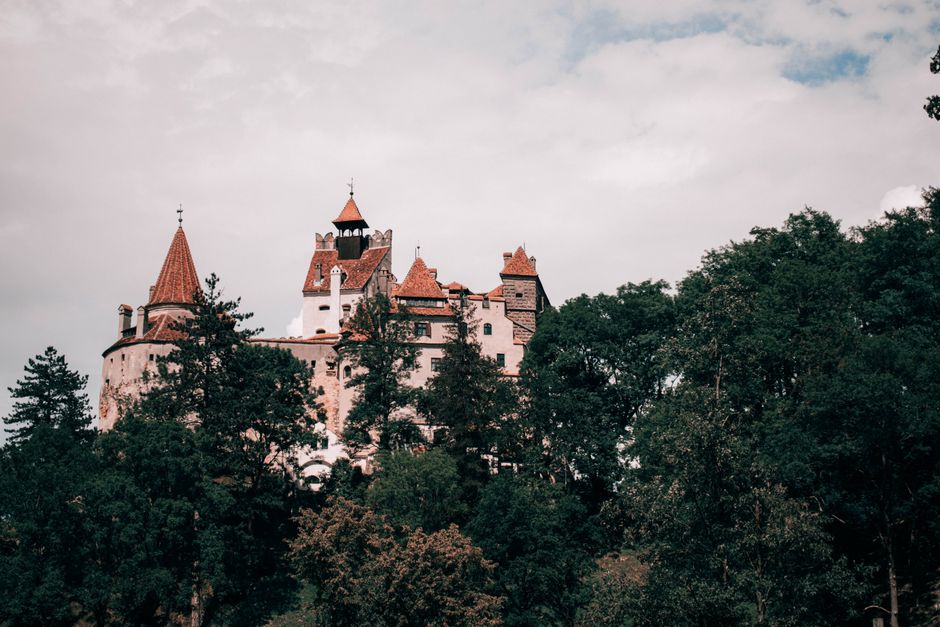
Bran Castle dominates every Romania tourism poster for good reason. This 14th-century fortress rises from a rocky outcrop near Brasov, with pointed towers and narrow windows that scream medieval menace. The castle's connection to Vlad the Impaler (the historical Dracula) is tenuous at best, but that hasn't stopped it from becoming Romania's most visited attraction.
Built in 1377 by Saxon merchants, Bran Castle served as a customs fortress controlling the mountain pass between Transylvania and Wallachia. Queen Marie of Romania transformed the interior into a royal residence in the 1920s, filling the rooms with Gothic furniture and Romanian folk art. Today you can explore 60 rooms across four floors, including the queen's private apartments and a medieval torture chamber.
The castle's most photographed spot is the inner courtyard, where a stone well drops 57 meters into solid rock. Legend claims it connects to underground tunnels, though modern surveys found no hidden passages. The top-floor windows offer panoramic views across the Carpathian foothills toward Brasov.
Pro Tip: Visit Bran Castle before 10am or after 4pm to avoid tour bus crowds. The morning light hitting the castle walls creates the best photos, and you'll have the narrow staircases mostly to yourself.
Entry costs 45 lei for adults (about 9 euros as of May 2026). The audio guide adds historical context that the sparse English signage lacks. Allow 90 minutes for a thorough visit, plus time to browse the medieval market in Bran village below the castle.
Peles Castle: Romania's Most Beautiful Royal Palace
If Bran Castle represents medieval fortress architecture, Peles Castle showcases royal luxury at its absolute peak. King Carol I built this Neo-Renaissance masterpiece in the late 1800s as his summer residence, importing German architects and craftsmen to create Romania's most ornate building.
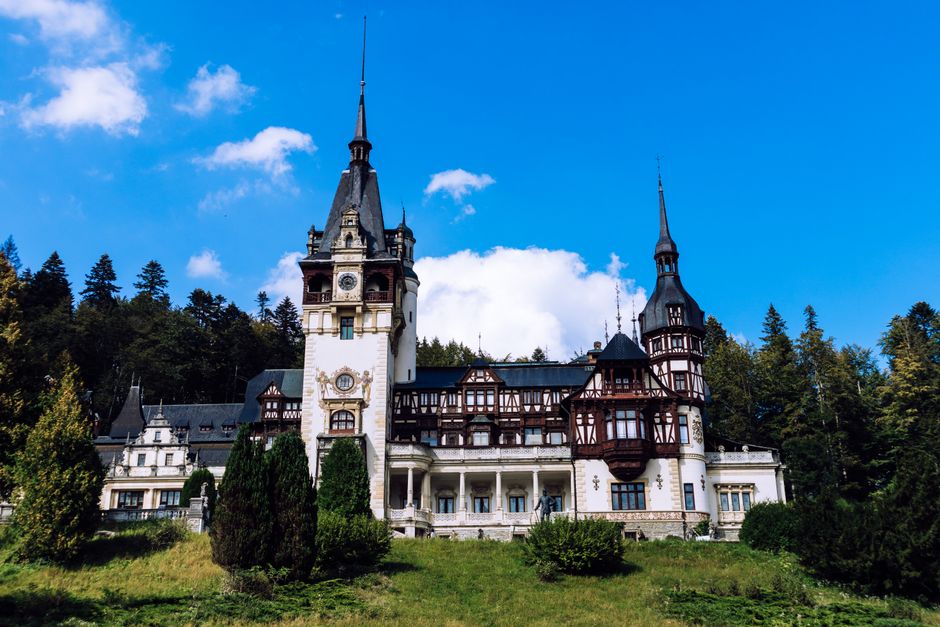
The castle contains 160 rooms decorated in different historical styles. The Hall of Honour features a retractable glass ceiling and walls covered in leather embossed with gold patterns. The Moorish Salon displays Ottoman weapons and carpets collected during Romania's Balkan campaigns. The Theatre Hall, built for private royal performances, rivals Vienna's opera houses in its ornate detail.
Peles pioneered several technological firsts in Romania. It was the first castle with electric lighting, central heating, and an elevator. The castle's own power station generated electricity from a nearby mountain stream, making it more modern than most European palaces when it opened in 1883.
The armory holds over 4,000 pieces, including medieval suits of armor, Ottoman daggers, and hunting rifles used by King Carol I. Each room showcases different woodworking techniques, from intricately carved German oak to polished Romanian walnut inlaid with mother-of-pearl.
Standard tours cost 50 lei and cover about 12 rooms on the ground floor. The full tour (75 lei) includes the royal apartments and offers access to normally restricted areas like the king's private study. Photography inside requires an additional 30 lei permit. The castle is closed on Mondays and Tuesdays year-round.
Corvin Castle: Transylvania's Gothic Masterpiece
Corvin Castle in Hunedoara ranks among Europe's largest and best-preserved Gothic castles. Built by Hungarian noble John Hunyadi in the 15th century, this massive fortress showcases military architecture at its most impressive, with towers reaching 50 meters high and walls thick enough to withstand Ottoman cannon fire.
The castle's most striking feature is its entrance bridge, which spans a deep moat on stone arches. The Knight's Hall, with its soaring ribbed vaults, hosted royal banquets and military councils. Gothic windows filter light into the great hall, creating shadows across stone floors worn smooth by centuries of use.
Hunyadi built Corvin as both fortress and palace, combining military necessity with Renaissance luxury. The castle's walls enclose multiple courtyards connected by covered walkways and spiral staircases. The Capistrano Tower, named after Saint John of Capistrano who preached crusades here, offers views across the Hunedoara valley.
- The Bear Pit - a cylindrical prison where legend claims Vlad the Impaler was held captive for seven years
- The Knights' Hall - featuring Gothic ribbed vaulting and medieval frescoes depicting battle scenes
- The Matei Basarab Tower - the castle's highest point with panoramic views of the surrounding Carpathian foothills
- The Diet Hall - where Transylvanian nobles met to discuss military campaigns against Ottoman forces
Corvin Castle survived Ottoman sieges, Habsburg occupation, and communist-era neglect. Recent restoration work revealed original 15th-century frescoes and architectural details hidden under later additions. The castle now hosts medieval festivals and historical reenactments throughout the summer months.
Entry costs 40 lei for adults. English guided tours run hourly during peak season and provide historical context that brings the medieval stones to life. Plan at least 2 hours to explore the multiple levels and courtyards thoroughly.
Rasnov Fortress: Mountain Citadel with Panoramic Views
Rasnov Fortress crowns a limestone hill 15 kilometers from Brasov, offering some of Romania's best castle views along with fascinating peasant fortress architecture. Unlike royal palaces, Rasnov was built by local Saxon communities as a refuge during Ottoman and Tatar raids.
The fortress follows the natural contours of its hilltop, creating an irregularly shaped citadel with thick walls and defensive towers. During sieges, the entire village population would retreat inside the walls, bringing livestock and supplies for extended holdouts. The fortress could shelter over 30 families plus their animals in times of danger.
Rasnov's most remarkable feature is its 146-meter-deep well, dug by hand through solid limestone by Turkish prisoners over 17 years. The well still provides fresh water today. According to local legend, the prisoners were promised freedom once they struck water, but were instead thrown into the well to keep its location secret.
The fortress houses a small museum displaying medieval weapons, traditional Saxon furniture, and archaeological finds from the surrounding area. The watchtower, reached by climbing 200 stone steps, provides 360-degree views across the Carpathian Mountains toward Brasov and the Piatra Craiului National Park.
Note: The climb to Rasnov Fortress involves a steep 20-minute hike from the parking area, or you can take the cable car (15 lei each way) that operates from April through October.
Modern additions include a zip line and adventure park built within the fortress walls, though these don't detract from the medieval atmosphere. The fortress stays open until sunset during summer months, making it perfect for afternoon visits when golden light illuminates the Carpathian peaks.
Cantacuzino Castle: Art Nouveau Elegance in the Carpathians
Cantacuzino Castle in Busteni represents a complete departure from Romania's medieval fortress tradition. Built between 1901-1911 for Prince Gheorghe Grigore Cantacuzino, this Art Nouveau palace showcases early 20th-century luxury against a backdrop of mountain peaks.
The castle's design blends Romanian architectural elements with French Belle Epoque styling. Ornate balconies, decorative stonework, and a distinctive tower create a romantic silhouette that seems more suited to the French Riviera than the rugged Carpathians. The castle served as a summer retreat for Romanian aristocrats fleeing Bucharest's heat.
Interior highlights include the Grand Salon with its coffered ceiling and original crystal chandeliers, the Music Room where renowned composer George Enescu performed private concerts, and the Prince's Study lined with first-edition books and hunting trophies. Original furniture and decorative arts remain throughout most rooms.
The castle's 3-hectare park contains formal gardens, a greenhouse complex, and walking paths that lead to viewpoints overlooking the Prahova Valley. Ancient oak trees and exotic plant species create a botanical garden atmosphere unique among Romanian castles.
Cantacuzino Castle gained international recognition as a filming location for several European movies, including scenes for Netflix productions. The castle's well-preserved interiors and mountain setting make it popular for period dramas and romantic films.
Tours cost 35 lei and run every hour from 9am to 5pm except Mondays. The English-language audio guide includes stories about the Cantacuzino family and details about the castle's construction. Photography is permitted throughout most areas without additional fees.
Medieval Fortresses of Wallachia and Moldavia
Beyond Transylvania's famous castles, Romania's other historical regions hide remarkable medieval fortifications that see far fewer tourists but offer equally compelling history and architecture.
Cetatea Neamt in northern Moldova stands as one of Eastern Europe's best-preserved medieval fortresses. Built by Petru I Musat in the 14th century, this circular stronghold defended Moldavia's capital against Polish and Hungarian invasions. The fortress walls, nearly 4 meters thick, enclose a central keep and several defensive towers connected by covered walkways.
Targoviste Royal Court in Wallachia served as the capital residence of Vlad the Impaler and other Wallachian princes. The complex includes the Chindia Tower, from which Vlad supposedly watched enemy impaling, and royal chambers where he held court. Archaeological excavations continue to uncover new sections of the medieval palace complex.
Suceava Fortress in northern Romania protected the medieval capital of Moldavia for over 400 years. The massive walls and towers showcase evolution in military architecture, from early medieval construction to Renaissance-era gun ports designed for artillery defense. The fortress museum displays weapons, armor, and artifacts from Moldavia's golden age.
- Fagaras Fortress - Transylvania's largest fortress by area, featuring a museum of regional history and well-preserved defensive walls
- Rupea Fortress - Multi-level hilltop citadel with three distinct construction periods spanning 700 years of military architecture
- Deva Castle - Ruined mountain fortress accessible by cable car, offering views across Hunedoara County
These lesser-known fortresses typically charge 20-30 lei entry and receive far fewer visitors than their famous Transylvanian cousins. Many offer English-language information boards and some provide guided tours during summer months. The remote locations add to their authentic medieval atmosphere.
Planning Your Romanian Castle Tour: Routes and Logistics
The most efficient castle route starts in Brasov and covers five major castles within a comfortable 3-day itinerary. Rent a car for maximum flexibility, as public transportation between castles involves multiple connections and significant time loss.
Day 1: Brasov Base - Visit Bran Castle (45 minutes from Brasov) in the morning, then Rasnov Fortress (30 minutes from Bran) in the afternoon. Both castles are close enough for easy day trips with time to explore Brasov's medieval old town.
Day 2: Prahova Valley - Drive to Sinaia (45 minutes from Brasov) to visit Peles Castle, then continue to nearby Cantacuzino Castle in Busteni (15 minutes from Sinaia). Stay overnight in Sinaia or return to Brasov.
Day 3: Hunedoara - Drive to Corvin Castle in Hunedoara (2.5 hours from Brasov), allowing a full day to explore Romania's largest medieval fortress. This requires the longest drive but offers the most impressive castle architecture.
Pro Tip: Purchase a Romania Castle Pass online for 150 lei, which provides entry to six major castles plus audio guides. The pass saves money if you visit more than three castles and lets you skip ticket lines during peak season.
Car rental costs approximately 120-150 lei per day for a compact car, plus fuel expenses. Parking at castle sites ranges from free (Rasnov, Corvin) to 10 lei per day (Peles, Bran). Most castle parking areas accommodate tour buses, so spaces are generally available even during busy periods.
Public transportation works for Peles Castle (direct train from Bucharest to Sinaia) and Bran Castle (bus from Brasov), but requires careful schedule planning and limits your flexibility. Organized day tours from Brasov cost 200-300 lei per person and typically visit 2-3 castles with transportation and guide included.
Book accommodations in Brasov, Sinaia, or Sighisoara to minimize driving distances. These towns offer the best selection of hotels, restaurants, and evening activities between castle visits. Reserve rooms 2-3 weeks ahead during July and August when Romanian and international tourism peaks.
Best Time to Visit Romanian Castles in 2026
May through September offers the most reliable weather and longest daylight hours for castle exploration. All major castles operate extended summer schedules with last entries at 6pm or later. Spring brings wildflowers to castle gardens but can include occasional rain showers that make outdoor photography challenging.
July and August see the heaviest crowds, especially at Bran and Peles castles where tour buses arrive from Bucharest throughout the day. Expect longer wait times for entry and crowded interior spaces during peak summer months. Accommodation prices increase 30-50% compared to shoulder seasons.
September and October provide excellent weather with smaller crowds and autumn colors in the Carpathian Mountains. Castle interiors offer welcome warmth during cooler days, and you'll have more space for photography without constant crowds in narrow medieval passages.
Winter castle visits (November through March) require careful planning as some castles operate reduced schedules or close completely. Peles Castle closes for annual maintenance from mid-November through February. However, snow-covered castles create magical winter scenes, and indoor heating makes visits comfortable during cold months.
- Peak Season (July-August): Longest hours, highest crowds, premium accommodation rates, best weather reliability
- Shoulder Season (May-June, September-October): Moderate crowds, pleasant weather, reasonable hotel prices, ideal photography conditions
- Off-Season (November-March): Minimal crowds, winter closures possible, lowest prices, winter landscapes
Check official castle websites before traveling as maintenance schedules and special events can affect normal operating hours. Romanian Orthodox holidays may result in modified schedules, particularly around Easter and Christmas periods. Most castle gift shops and cafes operate reduced hours during winter months.
Weather in the Carpathian Mountains changes quickly regardless of season. Bring layered clothing and waterproof jackets even during summer visits. Castle interiors stay cool year-round due to thick stone walls, making light sweaters advisable even on warm days.
Frequently Asked Questions
Which castle in Romania is the real Dracula castle? No single Romanian castle can claim to be "the" Dracula castle. Bran Castle gets the most attention due to its Gothic appearance and tenuous connection to Vlad the Impaler, but Poenari Castle (now mostly ruins) was actually one of Vlad's residences. Corvin Castle also claims connections through local legends.
How many days do you need to visit Romanian castles? Three full days covers the five major castles (Bran, Peles, Corvin, Rasnov, Cantacuzino) with comfortable pacing. Add 1-2 extra days if you want to explore additional fortresses in Moldavia or Wallachia, or if you prefer a more relaxed schedule with time for hiking and local attractions.
Can you visit Peles Castle and Bran Castle in one day? Yes, but it makes for a rushed experience. The drive between Sinaia (Peles) and Bran takes about 90 minutes, leaving limited time at each castle. Better to dedicate one full day to Peles and Cantacuzino (both in the Prahova Valley) and another day to Bran and Rasnov (both near Brasov).
What is the most beautiful castle in Romania? Peles Castle wins for interior luxury and architectural detail, while Corvin Castle impresses with medieval authenticity and silhouette. Bran Castle offers the most photogenic exterior perched on its rocky cliff. Beauty preferences depend on whether you prefer royal opulence or medieval fortress atmosphere.
Are Romanian castles open year-round? Most major castles operate year-round with reduced winter hours, but Peles Castle closes completely from mid-November through February for annual maintenance. Always check current schedules on official websites before traveling, as closures for repairs or special events can occur without advance notice.
Romanian castles offer an authentic journey through medieval and royal European history without the commercialized atmosphere found at many Western European tourist sites. You'll discover legendary fortress tales, fascination with medieval military architecture, and exploration of Europe's most iconic landmarks that rival the historic attractions in India or top destinations in the USA for their historical significance and beauty.


