
Forests
Top 20+ Must-See Destinations in Canada 2026: Ultimate Guide
Canada delivers some of the world's most diverse travel experiences, where towering Rocky Mountain peaks meet pristine coastal wilderness, historic French colonial cities blend with indigenous heritage, and the northern lights dance above vast boreal forests. You'll find destinations that span six time zones and offer everything from urban adventures...

Canada delivers some of the world's most diverse travel experiences, where towering Rocky Mountain peaks meet pristine coastal wilderness, historic French colonial cities blend with indigenous heritage, and the northern lights dance above vast boreal forests. You'll find destinations that span six time zones and offer everything from urban adventures in world-class cities to remote wilderness encounters that few travelers ever experience.
What sets Canada apart from other large countries is the exceptional accessibility of its natural wonders. Unlike remote wilderness areas in epic wilderness destinations in Australia, most of Canada's top attractions connect via well-maintained highways and established infrastructure. You can easily combine mountain adventures with city culture, coastal experiences with prairie landscapes, all while traveling through one of the world's safest and most welcoming countries.
This guide covers over 20 must-see destinations across all provinces and territories, from iconic national parks to lesser-known destinations that showcase Canada's remarkable geographic diversity. Planning a cross-country road trip or focusing on one spectacular region, these destinations represent the absolute best Canada has to offer in 2026.

Canadian Rocky Mountains: Banff, Jasper & Beyond
The Canadian Rockies represent the country's most iconic mountain destinations, where glacier-carved peaks rise above turquoise lakes and dense alpine forests. Banff National Park anchors this region as Canada's first national park and remains its most visited, attracting over 4 million visitors annually as of 2026.
Lake Louise delivers the classic Rocky Mountain experience with its emerald waters reflecting Victoria Glacier. You'll pay around $25 CAD per vehicle daily for park entry, but the lake access remains free once inside. The nearby Chateau Lake Louise offers luxury accommodations starting at $400 CAD per night in peak summer season, though booking 3-4 months ahead is essential.

Jasper National Park spans twice Banff's size with fewer crowds and wilder terrain. The Icefields Parkway connecting these parks ranks among the world's most scenic drives, passing the massive Columbia Icefield where you can walk on 10,000-year-old ice. Guided glacier tours run $75-95 CAD per person from May through September.
Maligne Lake in Jasper stretches 22 kilometers as the Canadian Rockies' largest natural lake. Spirit Island boat tours operate June through September for $85 CAD per adult, showcasing the lake's dramatic mountain reflections that appear on countless postcards.
Pro Tip: Visit Moraine Lake before 9 AM to avoid parking chaos and capture the famous "Twenty Dollar Bill" view without crowds. The road closes in winter, typically from October through May.
Beyond the famous parks, Kananaskis Country offers similar mountain scenery with fewer restrictions and lower costs. Mount Assiniboine Provincial Park provides backcountry hiking comparable to anything in the main parks, accessible via helicopter or challenging multi-day hikes.
Eastern Canada's Historic Cities & Natural Wonders
Quebec City preserves North America's most authentic European atmosphere within its UNESCO World Heritage walled old city. The cobblestone streets, stone fortifications, and French colonial architecture create an experience more European than many actual European cities, all while maintaining distinctly North American accessibility and infrastructure.
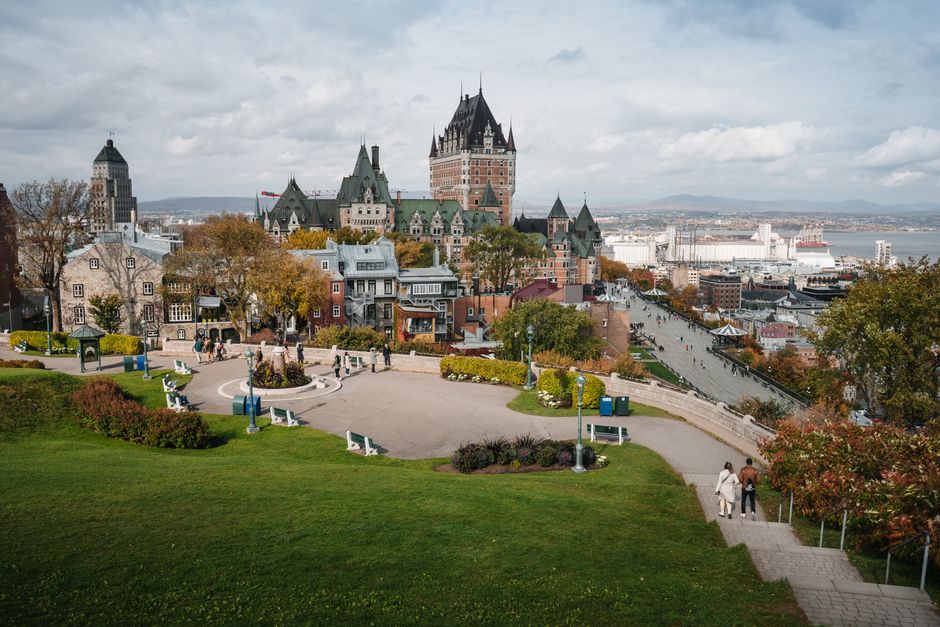
Château Frontenac dominates the Quebec City skyline as one of the world's most photographed hotels. Even if you stay elsewhere, the terrace offers spectacular St. Lawrence River views. Summer rooms start around $350 CAD, while winter rates drop to $200-250 CAD with equally beautiful snow-covered cityscapes.
The Maritime provinces showcase Canada's coastal heritage and natural beauty. Prince Edward Island delivers red sand beaches, Anne of Green Gables country, and the world's best mussels and lobster. Peak lobster season runs May through October, with roadside stands selling fresh lobster rolls for $15-20 CAD.
Nova Scotia's rugged Atlantic coast features the scenic Cabot Trail around Cape Breton Island. This 300-kilometer loop passes Celtic communities, highland scenery, and coastal views rivaling Scotland's dramatic landscapes. Peggy's Cove near Halifax provides Canada's most iconic lighthouse photo opportunity.
Niagara Falls remains one of North America's top natural attractions despite heavy commercialization. The Canadian side offers superior views of all three falls. Journey Behind the Falls costs $32 CAD for adults and gets you within meters of the thundering water. Visit early morning or late afternoon to avoid peak crowds and capture better lighting for photos.
British Columbia's Coastal Beauty & Urban Adventures
Vancouver combines world-class urban amenities with immediate access to mountains, ocean, and temperate rainforest. Stanley Park's seawall offers 8.8 kilometers of waterfront paths perfect for cycling or walking, with mountain and harbor views throughout. Bike rentals cost around $35 CAD for a full day.

Whistler transforms from winter Olympic venue to summer adventure playground. The Peak 2 Peak Gondola operates year-round ($75 CAD) connecting Whistler and Blackcomb mountains with spectacular alpine views. Summer activities include mountain biking, hiking, and the thrilling Whistler Mountain Bike Park.
Victoria on Vancouver Island showcases British colonial charm with mild Pacific climate. The famous Butchart Gardens displays over 900 varieties of plants across 55 acres. Entry costs $38 CAD for adults as of 2026, with evening illumination during summer months creating magical garden atmospheres.
Tofino delivers Canada's best surfing and coastal wilderness experiences. Long Beach stretches 16 kilometers of pristine Pacific coastline within Pacific Rim National Park. The town offers world-class storm watching in winter and exceptional whale watching spring through fall. Gray whale migrations peak in March and April.
The Inside Passage ferry route from Vancouver to Prince Rupert ranks among the world's most scenic water journeys, passing through protected coastal waters, fjords, and First Nations territories. The 15-hour journey costs from $200 CAD per person plus vehicle fees, but saves expensive flights to northern BC.
Northern Territories: Wilderness & Aurora Experiences
Canada's three territories offer some of the planet's most pristine wilderness experiences and the best northern lights viewing in North America. Yukon Territory provides the most accessible northern adventure, with Whitehorse serving as the gateway to vast wilderness areas.

Dawson City preserves authentic Klondike Gold Rush heritage with original wooden sidewalks, period buildings, and the famous Diamond Tooth Gerties Gambling Hall. The midnight sun illuminates this historic town from May through July, while September and October offer prime northern lights viewing without extreme cold.
Tombstone Territorial Park showcases dramatic granite peaks and pristine tundra landscapes. The park offers excellent hiking from June through September, with wildflower displays peaking in July. No services exist within the park, making it perfect for experienced wilderness travelers seeking solitude.
Note: Northern lights viewing requires several key factors: clear skies, minimal light pollution, and sufficient solar activity. September through March offers the best viewing window, with peak activity typically occurring between 10 PM and 2 AM.
Northwest Territories features even more remote wilderness experiences. Great Slave Lake near Yellowknife provides excellent aurora viewing combined with winter ice road adventures. Summer offers excellent fishing, with lake trout weighing over 40 pounds regularly caught.
Nunavut represents the ultimate Arctic adventure, though logistics and costs remain substantial. Baffin Island offers world-class Arctic hiking and Inuit cultural experiences, but expect to pay $5,000+ CAD per person for week-long guided adventures.
Ontario's Forests, Lakes & Cultural Hotspots
Algonquin Provincial Park epitomizes the Canadian wilderness experience that inspired the Group of Seven artists and countless canoe adventures. The park spans 7,653 square kilometers of pristine lakes, rivers, and boreal forest. Interior camping requires canoe access and offers complete wilderness immersion for $14 CAD per person per night.
The Highway 60 Corridor provides easy access to Algonquin's beauty without backcountry requirements. The Lookout Trail offers spectacular fall color viewing from September through early October. The Visitor Centre features excellent exhibits on park ecology and logging history.
Muskoka region north of Toronto combines pristine lakes with upscale cottage country atmosphere. Lake Joseph, Lake Muskoka, and Lake Rosseau offer crystal-clear waters, granite shorelines, and luxury resorts. Summer cottage rentals range from $2,000-8,000 CAD per week depending on size and lakefront access.
Toronto delivers world-class urban experiences with remarkable cultural diversity. The CN Tower remains iconic but Distillery District offers more authentic local atmosphere with Victorian architecture, local breweries, and artisan shops. Kensington Market and St. Lawrence Market showcase the city's food scene.
Thousand Islands region along the St. Lawrence River features over 1,800 islands, many with elaborate summer mansions from the Gilded Age. Boldt Castle on Heart Island tells a fascinating love story through its unfinished castle construction, accessible via boat tours from Alexandria Bay.
Prairie Provinces: Natural Landscapes & Geological Wonders
The Prairie provinces offer unexpected natural beauty and unique geological formations often overlooked by international visitors. Alberta's Badlands around Drumheller showcase otherworldly landscapes carved by millions of years of erosion, creating dramatic hoodoos and fossil-rich formations.
Royal Tyrrell Museum houses one of the world's finest dinosaur collections, featuring over 40 complete dinosaur skeletons. The museum costs $21 CAD for adults as of 2026 and offers hands-on fossil preparation labs and guided badlands walks.
Writing-on-Stone Provincial Park preserves the largest collection of First Nations petroglyphs and pictographs on the Great Plains. The park's sandstone formations and Milk River valley create a unique prairie landscape protected as both provincial park and UNESCO World Heritage Site.
Saskatchewan surprises visitors with Prince Albert National Park, where boreal forest meets prairie grassland. Waskesiu Lake offers excellent swimming, fishing, and water sports in a pristine wilderness setting. The park's backcountry camping provides solitude rarely found in more famous national parks.
Grasslands National Park protects Canada's only national park dedicated to prairie grassland ecosystem. The park offers exceptional stargazing due to minimal light pollution, plus opportunities to see bison, prairie dogs, and over 180 bird species in their native habitat.
Manitoba's Riding Mountain National Park features a unique "island" of boreal forest and aspen parkland rising from surrounding prairie. The park offers excellent hiking, wildlife viewing, and the historic resort town of Wasagaming on Clear Lake.
Best Times to Visit Canada's Top Destinations
Canada's vast size creates dramatically different optimal visiting seasons depending on your chosen destinations and activities. Summer (June-August) delivers the most reliable weather nationwide but also brings peak crowds and highest prices at major attractions.
Rocky Mountain destinations peak from July through early September when high-elevation hiking trails become snow-free and lakes reach their most brilliant turquoise colors. Shoulder seasons (May-June, September-October) offer fewer crowds but potentially limited access to higher elevation areas.
Eastern Canada shines during fall foliage season, typically peaking from mid-September through early October. Quebec's maple forests create spectacular displays, while Maritime provinces offer comfortable temperatures and smaller crowds. Similar to planning a complete travel guide for Morocco, timing your visit around optimal weather windows significantly enhances the experience.
- Spring (April-May) brings wildflowers to prairie provinces and comfortable temperatures for urban exploration in Toronto, Montreal, and Vancouver
- Summer (June-August) provides optimal conditions for northern territories, northern lights viewing starts in late August in the Yukon
- Fall (September-November) offers peak foliage colors, comfortable temperatures, and reduced crowds at most destinations
- Winter (December-March) enables winter sports in the Rockies, northern lights viewing, and unique ice experiences like Quebec City's Winter Carnival
Northern lights season runs from late August through April, with peak viewing from September through March. Clear, dark skies are essential, making rural locations far from city lights optimal for aurora experiences.
Whale watching seasons vary by coast: Pacific coast peaks June through October for orcas and gray whales, while Atlantic coast offers best whale watching July through September with humpback, minke, and fin whales.
Planning Your Canadian Adventure: Transportation & Logistics
Renting a car provides the most flexibility for exploring Canada's diverse destinations, especially for Rocky Mountain parks, Maritime provinces, and prairie regions. Compact cars rent for $45-65 CAD daily, while SUVs suitable for mountain driving cost $75-110 CAD daily as of 2026.
Via Rail connects major cities across southern Canada, offering scenic routes particularly between Toronto and Vancouver. The Canadian transcontinental train takes 4 days, 3 nights with sleeping car accommodations starting around $1,500 CAD per person. Book well ahead for summer travel.
Pro Tip: Consider flying between distant regions (Vancouver to Toronto, for example) then renting cars for regional exploration. Domestic flights often cost less than expected driving time and fuel, especially for cross-country distances.
Accommodation strategies vary significantly by region and season. Rocky Mountain towns require booking 3-6 months ahead for summer visits, while prairie and Maritime provinces offer more flexibility. Parks Canada camping reservations open in January for the coming summer, with popular sites filling within hours.
Just as travelers benefit from detailed planning when exploring best mountains in Chile or epic mountain destinations in New Zealand, Canada's vast distances require strategic route planning.
Budget considerations for Canada travel in 2026:
- National park passes: Annual Discovery Pass costs $72 CAD per family, paying for itself after visiting 3-4 parks
- Accommodation: Budget hotels/motels $80-120 CAD, mid-range $150-250 CAD, luxury resorts $350+ CAD per night
- Meals: Fast food $12-18 CAD, casual dining $25-40 CAD, fine dining $60+ CAD per person
- Fuel: Gasoline averages $1.45-1.65 CAD per liter as of June 2026, with higher prices in remote areas
Border requirements remain straightforward for most visitors. US citizens need valid passports for all border crossings. Most European visitors receive automatic 6-month tourist visas upon arrival. Always verify current requirements on the official Government of Canada website before travel.
Connectivity and payments: Major credit cards work everywhere, though small rural businesses may prefer cash. Cell phone coverage reaches most populated areas and major highways, but expect dead zones in remote wilderness areas. Consider purchasing a Canadian SIM card or roaming plan for extended visits.
Canada delivers unmatched diversity and accessibility for travelers ready to explore mountain adventures comparable to breathtaking destinations in Switzerland, forest experiences rivaling epic wilderness destinations in Australia, or comprehensive planning resources like a travel planning FAQ guide. From Rocky Mountain peaks to Arctic wilderness, this remarkable country offers experiences across six time zones that satisfy every type of traveler.


